Some in cyberspace have been casting libelous aspersions on my status as a graduate student studying Muslim socio-political movements, including transnational extremist groups such as Al-Qa'ida Central and its affiliates, as well as the academic nature and integrity of my blogs. My writing here at Views from the Occident and my two subsidiary blogs is clearly labeled as being academic in nature. Frankly, I think that it is pretty clear to those who actually read my original posts (as opposed to postings/pasting of primary sources and third party articles) that this is the case. I am also honored to have my blog(s) listed in the "Links" sections of a few noted experts and specialists in transnational militant groups and counter-terrorism, a fact that the libelers have conveniently failed to note. They also seem ignorant of the fact that jihadi-takfiris do not call themselves "takfiri" and actually object to being labeled as such.
Honest and constructive critique, criticisms, and suggestions are always welcome, which is why I have set up an e-mail address for my blogs. Libel and gross aspersions on my character and academic integrity, however, are not. My academic e-mail is also available via a quick Internet search, should any who seem to think that I am not a graduate student wish to check the facts before engaging in libel.
Thanks to my readers and to my professorial mentors, friends, colleagues, and (God willing) future colleagues for their continued support and advice. Peace.
Wednesday, July 14, 2010

Friday, June 4, 2010
Four Hadith on Jihad from Sahih al-Bukhari, One of the Sunni Sahihayn
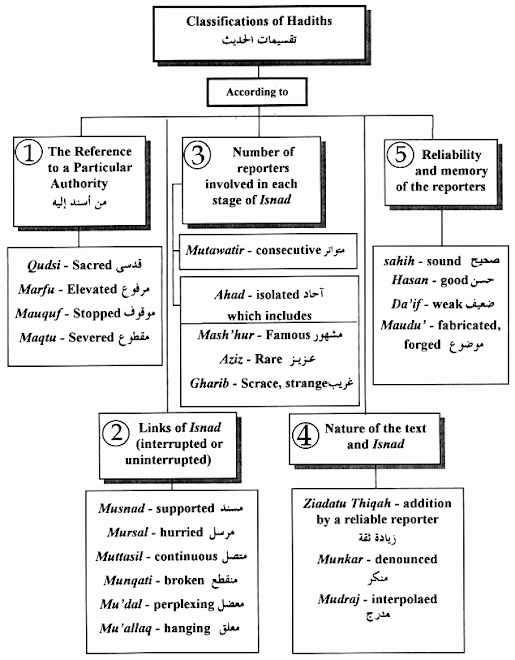
 Abu 'Abdullah Muhammad ibn Isma'il ibn Ibrahim al-Bukhari al-Jufi (usually referred to as Imam al-Bukhari), was born in 810 and died in 870 C.E. in the important Central Asian city of Bukhara, which is now in modern day Uzbekistan. He is one of the two most important and highly-regarded Muslim compilers of ahadith (singular: hadith), traditions of the Prophet Muhammad's reported sayings, judgments, and actions. The other is Abu'l Husayn Muslim ibn al-Hajjaj Wushayri al-Nishaburi ("one from Nishapur," a city in the region of Khurasan in modern day Iran), known more commonly as by his shortened name, Muslim ibn al-Hajjaj or "Imam Muslim." Their two collections are among the "six books" that today make up the Sunni hadith cannon.
Their two ahadith collections, Sahih al-Bukhari and Sahih Muslim, are the most widely respected and commonly referred to collections of ahadith by Sunni Muslims and Islamicist scholars alike. Shi'is, particularly Twelver Shi'is, have their own ahadith collections and do not generally consider the Sahihayn ("two Sahih collections" of al-Bukhari and Muslim) to be reliable. "Sahih" is a technical term referring to the "soundness" of the ahadith contained in the collections, a judgment based on a number of factors including the asaneed (singular: isnad) or the chains of transmission (transmitters) through which the ahadith are narrated). A detailed Sunni Muslim hagiographical biography of al-Bukhari can be found HERE.
The translations below are largely based on those of Muhammad Muhsin Khan's dual-language translation of Sahih al-Bukhari, published by Dar us-Salam Publications. I have made some amendments.
__________________________________
Hadith #2797, Kitab al-Jihad, Sahih al-Bukhari
Abu al-Yaman from al-Zuhri from Sa'id ibn al-Musayyab narrated from Abu Hurayrah: The Prophet said: "By Him [God] in Whose Hands my soul is: Were it not for some men amongst the Believers [Muslims] who dislike to be left behind me and whom I cannot provide with means of conveyance, I would certainly never remain behind any Sariyah [battalion, military unit] going out for jihad [struggle, in this case armed struggle] in the Path of God [as ordained by God in the Qur'an]. By Him in Whose hands my soul is: I would love to be martyred [fighting] in the path of God and then come back to life and be martyred again, and then come back to life and be martyred again."
Hadith #2817, Kitab al-Jihad, Sahih al-Bukhari
Muhammad bin Nashar from Ghundar from Sh'ubah narrated by Anas ibn Malik: The Prophet said: "Nobody who enters Paradise likes to return to the world even if he got everything on the Earth, except a martyr who wishes to return to the world so that he may be martyred ten times because of the honor and dignity he receives from God."
These two hadith are famous ones and are quoted by jihadi-takfiris, including Al-Qa'ida Central leader Usama bin Laden in the introductory segment to the video series Wind of Paradise, a series of four videos (currently) dedicated to the group's "martyrs" in the Afghanistan-Pakistan theater. See the short embedded video below [starts at the1:43-minute mark].
__________________________
Hadith #2841, Kitab al-Jihad, Sahih al-Bukhari
Shayban from Yahya from Abu Salamah narrated by Hurayrah: The Prophet said, "Whoever spends two things in the Path of God [as ordained by Him in the Qur'an] will be called by all the gatekeepers of Paradise who will be saying, 'O so-and-so, come here!'" Abu Bakr [the first caliph or head of the Muslim community following the Prophet's death in 632 C.E.] said: "O, Messenger of God! Such persons will never be destroyed." The Prophet said: "I hope you will be one of them."
___________________________
Hadith #2818, Kitab al-Jihad, Sahih al-Bukhari
'Abdullah ibn Muhammad from Mu'awiya ibn 'Amr Abu Ishaq from Musa ibn 'Uqbah from Salam Abu al-Nadr, Mawla of 'Umar ibn 'Ubayd Allah, narrated from 'Abdullah ibn Abu Awfa: The Messenger of God said: "Know that Paradise is in the shade of swords."
Tuesday, June 1, 2010
Iranian Ayatullah Muhammad Misbah-Yazdi: He Who Does Not Rule by God's Permission & that of an Infallible is an Idol-worshipper
 Ayatullah Muhammad Taqi Misbah-Yazdi (Mesbah-Yazdi), born 1934, is a senior Iranian Twelver Shi'i religious scholar who supports the system of government instituted in the early 1980s by Grand Ayatullah al-Sayyid Ruhullah Khumayni (Ruhollah Khomeini) and his supporters after the 1978-1979 Iranian Revolution. He is often rumored to be the "spiritual adviser" to Iran's current president, the controversial Mahmoud Ahmadinejad, as well as the head of the underground Hojjatiyyeh (Hujjatiyya; Hojjatieh) movement, which was banned by Khumayni. Misbah-Yazdi denies the latter claim and no substantial evidence has been offered to support it.
The ayatullah is a member of the Assembly of Experts, a powerful government body composed of Shi'i jurists (mujtahids) who are responsible for electing and monitoring the country's supreme leader (rahbar-e jumhuri-ye Islami). Misbah-Yazdi is a staunch supporter of Khumayni's conception of wilayat al-faqih (velayat-e faqih in Persian), approximately the "authority of the jurisconsult." Khumayni argued that in the absence of the twelfth Imam, Muhammad al-Mahdi, who Twelver Shi'is believe is in a mystical hiding from which he will return at an appointed time, the 'ulama (religious scholars) were to act in his stead. Of the 'ulama (or fuqaha), a single jurist (faqih) would be the leading guide. Although Twelver Shi'i scholars have long argued that they were acting as stewards, of sort, of Twelver Shi'is until the return of the Imam, Khumayni expanded his definition of wilayah significantly and his concept was and is not accepted or considered a requirement by many Twelver Shi'i 'ulama.
In the quote below, taken from Misbah-Yazdi's official web site, he discusses the role of the wali al-Amr (legitimate ruler, guardian) and suggests that an individual who does not rule in accordance to the laws of God and one of the 14 "Infallibles" that Twelver Shi'is believe in is an idol-worshipper/tyrant (Taghut). The 14 "Infallibles" are Islam's Prophet Muhammad, his daughter Fatima al-Zahra (wife of the first Imam, 'Ali ibn Abi Talib), and the 12 Imams). Theoretically, these would include all non-Twelver Shi'i Muslims including Isma'ili and Zaydi Shi'is and the majority (85-90%) of the world's Muslims, who are Sunni, as they do not view thirteen of these fourteen historical personalities as "infallibles" (the 12 Imams and Fatima).
_____________________
"The first and the most important question an intelligent and thinking existent should answer, and select one’s way of life accordingly, by free will and rational choice, is whether we are gods or servants? If we accept that we are servants, the sign of servitude is to make our will fade away in Allah's will. Therefore, all affairs in our lives, whether individual, economical, governmental, or political, should be governed by the will of Allah; Vali al-‘Amr should rule with Allah's permission as well. Otherwise — as the Late Imam Khomeini (r.) said — a person who rules without the permission of Allah and that of an Infallible is a taghut."
______________________
ARABIC
إنّ أوّل وأهمّ قضيّة يتعيّن على الإنسان ـ بعنوانه موجوداً متفكّراً ـ الإجابة عليها وانتخاب طريقه بحرّية وباختيار كامل على غرارها هي: هل إنّه عبد أم إله؟ فإن أقرّ بعبوديّته فإنّ علامة العبوديّة هي إفناء الإنسان إرادته في إرادة الباري تعالى؛ إذن فإنّ جميع شؤون حياتنا ابتداءً من المسائل الفرديّة وصولاً إلى الاقتصاديّة وانتهاءً إلى الحكومة والسياسة لابدّ أن تكون تابعة ومنقادة لإرادة الله عزّ وجلّ؛ حتّى "وليّ الأمر" فإنّه يجب أن يحكم بإذن الله. وإلاّ فكما قال الإمام الراحل (رحمة الله عليه): إذا مارس امرؤ الحكم من دون إذن الله أو إجازة المعصوم (عليه السلام) فهو طاغوت.
______________________
PERSIAN
اولين و مهمترين مسالهاي كه انسان به عنوان يک موجود انديشمند و متفکر بايد به آن پاسخ بدهد و بر اساس آن آزادانه و با اختيار راه خويش را انتخاب کند، اين است که آيا ما بندهايم يا خدا؟ اگر پذيرفتيم كه بندهايم، نشانه بندگي اين است که انسان اراده خود را در اراده خدا فاني کند؛ پس همه شؤون زندگي ما از مسايل فردي گرفته، تا اقتصاد، حکومت و سياست بايد تابع اراده خدا باشد؛ «وليامر» هم بايد به اذن خدا حکومت کند. در غير اين صورت ـهمانطور که حضرت امام(رحمةاللهعليه) فرمودـ اگر کسي بياذن خدا و بدون اجازه معصوم عمل کند، طاغوت است.
Friday, May 21, 2010
Three Hadith on the Greeting of Peace (As Salaamu 'Alaykum) from Usul al-Kafi, Compiled by Shi'i Scholar al-Kulayni
 Abu Ja'far Muhammad bin Ya'qub bin Ishaq al-Kulayni al-Razi (864-941 C.E.) was a ninth/tenth century Twelver Shi'i religious scholar and muhaddith, a scholar and specialist in hadith (plural: ahadith), reports of the Prophet Muhammad's sayings and actions as recorded by transmitters from Companions of the Prophet. For Twelver Shi'is, ahadith may also be sayings and actions of the 14 "Infallibles," individuals whom they believe to be inerrant. These 14 include the 12 Imams, descendants of the Prophet through his cousin and son-in-law, 'Ali bin Abi Talib, and, more specifically, 'Ali's son Husayn, the third Imam.
Al-Kulayni, as he is usually known, compiled one of the four collections of ahadith (al-kutub al-arb'ah) considered canonical by Twelver Shi'is, Kitab al-Kafi ("Sufficient Book"). The two hadith below come from the one part of the collection, Furu' al-Kafi (approximately, "Sufficient Branches"). Both address the issue of jihad ("struggle"), which has numerous varieties in Sunni and Shi'i jurisprudence, including the now well-known military jihads, offensive and defensive. Honorific formulas repeated after the name of scholars, Infallibles, and the Prophet are omitted.
_______________________________
Hadith #3638, Book of Social Manners, Chapter 10, Hadith #1
'Ali ibn Ibrahim narrated from his father Hammad ibn 'Isa from Rib'i ibn 'Abdullah from Abu 'Abdullah (sixth Imam, Ja'far al-Sadiq), who said: "The Messenger of God would offer greetings of peace to women and they would respond to him. The commander of the faithful (Amir al-Mu'mineen; first Imam, 'Ali ibn Abi Talib) would offer greetings of peace to women but he disliked offering it to young women. He would say: 'I fear their voice may attract me and a feeling may cause me more harm than the reward for offering the greeting of as salaamu 'alaykum.'"
Hadith #3640, Book of Social Manners, Chapter 11, Hadith #2
Muhammad ibn Yahya narrated from Ahmad ibn Muhammad ibn 'Isa from Muhammad ibn Yahya from Ghiyath ibn Ibrahim from Abu 'Abdullah (sixth Imam, Ja'far al-Sadiq), who said: "The commander of the faithful (first Imam, 'Ali ibn Abi Talib) has said, 'Do not initiate the offering of as salaamu 'alaykum to the People of the Book (Christians, Jews, Sabians), but if they offer it, just reply, 'wa 'alaykum' ("the same unto you")."
Hadith #3639, Book of Social Manners, Chapter 11, Hadith #1
'Ali ibn Ibrahim narrated from his father Ibn Abu 'Umayr from Ibn 'Udhaynah from Zurara from Abu Ja'far (fifth Imam, Muhammad al-Baqir) who said: "Once, a Jew [a Jewish person, yahudi) went into the presence of the Messenger of God while [his wife] 'A'isha* was with him. The Jew said, "Sam 'alaykum" (wrath, condemnation upon you) instead of "As salaamu 'alaykum" (upon you be peace). The Messenger of God replied, "'Alaykum" ("the same unto you"). Then another Jew came and said the same thing as the one before and the Messenger of God responded in the same manner as he had before. Then a third Jew came. He also said the same thing that the other two had said before and the Messenger of God responded just as he did the previous two times.
'A'isha became angry and said: "'Alaykum al-Sam (wrath, condemnation upon you), O' group of Jews, brethren of monkeys and swine.' The Messenger of God said to her, "O' 'A'isha, if hurling insults were to appear with a shape and form, it would have a very evil shape. Wherever gentleness is placed it beautifies this place and removing gentleness is only to make it a despised place."
'A'isha then asked, "O' Messenger of God, did you not hear their words, 'al-Sam 'alaykum'?" The Messenger of God said, "I heard them, but did you not note how I have replied to them? I said: ''Alaykum" (and unto you). Whenever a Muslim offers you the greeting of peace, say: 'As salaamu 'alaykum,' but when a non-Muslim says something to you in their way, just say ' 'Alayka' (and unto you).'
Wednesday, May 12, 2010
Iranian Ayatullah Muhammad Misbah-Yazdi: Defend Wilayat al-Faqih (Khumayni's Concept) to the "Last Drop of Our Blood"

Ayatullah Muhammad Taqi Misbah-Yazdi (Mesbah-Yazdi), born 1934, is a senior Iranian Twelver Shi'i religious scholar who supports the system of government instituted in the early 1980s by Grand Ayatullah al-Sayyid Ruhullah Khumayni (Ruhollah Khomeini) and his supporters after the 1978-1979 Iranian Revolution. He is often rumored to be the "spiritual adviser" to Iran's current president, the controversial Mahmoud Ahmadinejad, as well as the head of the underground Hojjatiyyeh (Hujjatiyya; Hojjatieh) movement, which was banned by Khumayni. Misbah-Yazdi denies the latter claim and no substantial evidence has been offered to support it.
The ayatullah is a member of the Assembly of Experts, a powerful government body composed of Shi'i jurists (mujtahids) who are responsible for electing and monitoring the country's supreme leader (rahbar-e jumhuri-ye Islami). Misbah-Yazdi is a staunch supporter of Khumayni's conception of wilayat al-faqih (velayat-e faqih in Persian), approximately the "authority of the jurisconsult." Khumayni argued that in the absence of the twelfth Imam, Muhammad al-Mahdi, who Twelver Shi'is believe is in a mystical hiding from which he will return at an appointed time, the 'ulama (religious scholars) were to act in his stead. Of the 'ulama (or fuqaha), a single jurist (faqih) would be the leading guide. Although Twelver Shi'i scholars have long argued that they were acting as stewards, of sort, of Twelver Shi'is until the return of the Imam, Khumayni expanded his definition of wilayah significantly and his concept was and is not accepted or considered a requirement by many Twelver Shi'i 'ulama.
In the quote below, taken from Misbah-Yazdi's official web site, he succinctly discusses the importance, in his view, of Khumayni's wilayat al-faqih (the English translation is the official one from his web site; I have also included the Arabic and Persian versions of the statement):
_________________________________
"The most important thing which we should defend to the last drop of our blood is vilayat faqih. This is what the arrogant powers hatch their plot and try their best to challenge. That is because, different authorities regardless of their status, position, and clothing are prone to be misled; and the only one they cannot mislead is the valy faqih. This is why the enemies of the Islamic system suffer enormous costs in order to weaken vilayat faqih."
مشکاة
إنّ أهمّ الامور التي يتعيّن علينا الدفاع عنها حتّى آخر قطرة دم في عروقنا هي مسألة ولاية الفقيه وإنّ كلّ مؤامرات ومساعي الاستكبار تصبّ في وادي مواجهة ولاية الفقيه. إذ من الممكن بطريق أو باُخرى حرف الشخصيّات المختلفة بأيّ زيّ تزيّت وفي أيّ منصب كانت، وإنّ الشخصيّة الوحيدة التي لا يمكن حرفها هي شخصيّة الوليّ الفقيه والقائد. ولهذا السبب نرى أنّ أعداء النظام الإسلاميّ قد بذلوا ويبذلون مبالغ طائلة في سبيل تضعيف ولاية الفقيه
مشکات
مهمترين امري كه بايد تا آخرين قطره خون از آن دفاع كنيم مسأله ولايت فقيه است و همه توطئهها و تلاشهاي استكبار به خاطر مقابله با ولايت فقيه است. زيرا شخصيتهاي مختلف را در هر لباس و پست و مقامي ميتوان به گونهاي منحرف كرد؛ تنها كسي را كه نميتوان منحرف كرد، ولي فقيه و رهبري است. به همين دليل دشمنان نظام هزينههاي هنگفتي را در جهت تضعيف ولايت فقيه صرف كرده و مي كنند.
Subscribe to:
Posts (Atom)

 Posts